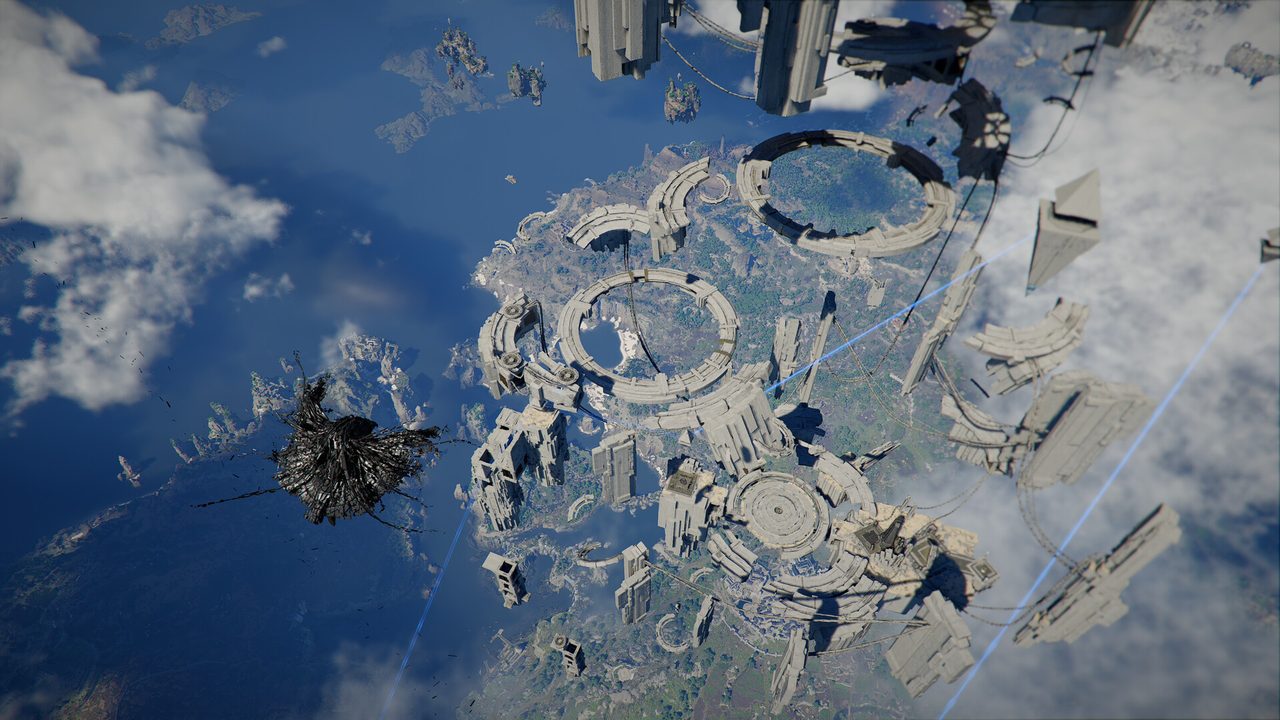
The Scale of Pywel
Pywel spans green lowlands, frozen plains, forests, ancient ruins and the red wastes — roughly twice the size of Skyrim's map. Plan travel around mounts and fast travel, not walking.
Bell Towers & Fast Travel
Climb Bell Towers to reveal the surrounding map (like a viewpoint/Ubisoft tower). Towers also unlock fast travel points — prioritize the towers in a region before exploring it.
Movement Kit
- Climbing: most vertical surfaces are climbable with stamina.
- Grapple / rope: the Blue-tree grapple is a traversal workhorse.
- Triple jump: from the skill tree — huge for platforming.
- Gliding: gliders from tech; pair with height for long crossings.
- Mounted flight: dragons trivialize endgame travel.
Hidden Elements
- Sky islands: floating zones reachable only with flight or clever grapple.
- Environmental puzzles: element reactions open secret areas.
- Named-but-unvisited places: mysterious names on the map tease hidden content — worth chasing.
Per-Region Exploration Order
Hernand (complete all towers) → Pailune → Demeniss → Delesyia → Crimson Desert. Clear each region's towers + dungeons before moving on; you'll naturally out-gear the next region's bosses.
Traversal efficiency
Pywel is roughly twice the size of Skyrim's map, so plan travel around mounts and fast travel, not walking. The region routine that works: climb the region's Bell Towers first — they reveal the map and unlock fast travel points — then explore downward from them. Abyss fast-travel points on the map layer let you dive straight down to ground-level destinations, which turns cross-region trips into minutes.
Sky Islands and the vertical game
The floating Sky Islands are the signature exploration reward, and the climbing kit makes most of the vertical game a stamina puzzle rather than a gear gate: manage the stamina bar on long climbs the same way you do in boss fights, and remember mounts absorb fall damage on dismount routes. Beacon anything you can see but cannot reach yet — the map memory pays off once the Abyss travel layer opens.
Hidden elements and how they surface
Pywel hides its secrets in three layers: environmental oddities (unusual ruins, lone camps, cave mouths), Observation triggers (watching NPCs or enemies do something remarkable), and the sky islands overhead. The bell-tower viewpoints mark several, but the best-hidden ones surface through the quest lines that criss-cross each region — one more reason the quest log and the map are the same tool.
Per-region exploration order
Work each region in the same shape: bell tower first, then the settlements and their quest givers, then the fast-travel spokes outward as mounts unlock terrain. The frozen plains and red wastes punish unprepared traversal, so save those for the second pass with a desert or cold-hardy mount; the lowlands and forests forgive early wandering and pay for it with Ore, lumber and beast contracts.
Mapping habits that pay
Mark as you go: the map layer is only as good as the pins you drop, and three pins per region — an unreachable sky island, an oddity to revisit, a resource cluster — turn later chapters into errands instead of expeditions. The hidden-element layer rewards exactly this: most secrets are reachable minutes from a tower you already climbed, once the movement kit or a mount unlocks the approach.