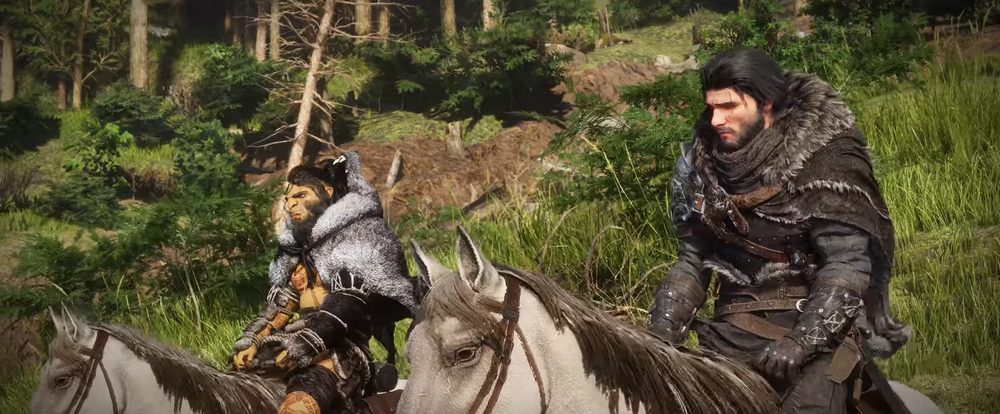
Mount Overview
Horses (travel), bears (tanky combat), raptors/lizards (speed/desert), direwolves (pack mobility), dragons (flight), and mechs (missile firepower). Most mounts can fight; mechs run on limited fuel.
Taming Wild Horses
- Head to Deepfog Basin (Hernand) where wild horses roam.
- Approach slowly — sprinting spooks them.
- Mount the horse and survive the bucking mini-game (mash/steady input).
- Once broken, the horse joins your stable.
Combat Mounts
| Mount | Signature attack | Acquire |
|---|---|---|
| Brown Bear | Claw swipes, heavy stagger | Tame (Pailune) |
| Raptor | Pounce, speed bites | Tame (Hernand edge) |
| Riding Dragon | Fire breath, flight | Late quest (Crimson Desert) |
| Dwarf Mech | Missile volleys, claws | Delesyia tech quests |
Unlock Pacing
Early: tame a wild horse asap — travel is the bottleneck. Mid: bear/raptor for combat. Late: dragon for flight, mech for raw firepower (watch fuel). Don't skip the horse — the map is roughly 2× Skyrim and walking is misery.
Taming field guide
Start in Deepfog Basin near Hernand, where the wild horses roam. Approach slowly — sprinting spooks them — mount up, and survive the bucking mini-game with steady, paced input. Once broken, the horse joins your stable. The same discipline scales to every family: bears in the Pailune forests, raptors at the Crimson Desert edges, and the late-game dragon and mech lines behind quests and progression walls.
Choosing a mount by role
Six families cover six jobs: horses for travel, bears for tanky frontline combat, raptors and desert lizards for speed and heat, direwolves for pack-style mobility, dragons for flight, and mechs for missile firepower at the cost of limited fuel. Combat mounts share a movement kit — double-jump, drift, and fall-damage protection — so once you own one fighter, your travel mount can stay a cheap horse.
Stable economics
The stable book is free storage for mobility: every tamed animal waits there indefinitely, so the real cost of a mount is the taming attempt, not ownership. Register a horse at every region's camp before pushing deeper — a fast-travel network plus a regional stable means a lost or dead mount costs minutes to replace, and the desert families that carry the red-waste crossings are always one stable stop away.
Feeding, food and upkeep
Animals eat, mechs refuel, and both cost less when bought in bulk at region markets — feed prices track the same settlement spreads the economy page covers. The upkeep habit is one camp visit per chapter: restock feed for the animals you ride, fuel for the mech if a raid is planned, and let the stabled remainder coast.
Mounts in boss and raid content
Combat mounts add double-jump, drift and fall-damage protection, which matters more than their damage in raid-style fights: the extra dodge layer rewrites phase-transition survival. Bring a combat mount to field bosses and open-air raids, leave it stabled for interiors and arena gates — the game will tell you when the saddle is not an option.
Reading the index rows
Type, tier, combat capability and acquisition make up each row, and the honest way to use them is backwards: decide the job first (crossing, cargo, combat, terrain), filter by which family survives it, then check the acquisition route for feasibility at your current chapter. The fastest animal is the one you can actually catch this week.