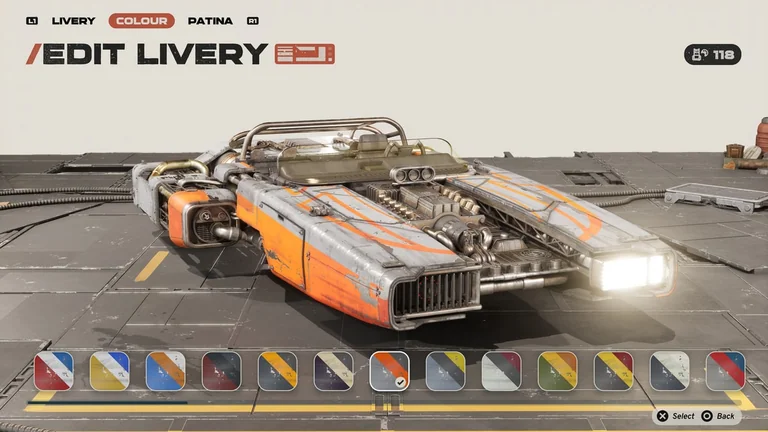
Understand what a run asks you to choose
In the 6 October developer interview, Fuse Games describes choosing a vehicle, selecting a Racer Style, racing, and spending earned resources between planets. The available rewards introduce variation. The same interview discusses the consequences of wrecking out of an attempt.
That structure makes a reliable, adaptable setup useful. A comparison should cover both control and the choices that become available later. We do not publish a “best build” ranking because we have not measured the current vehicles, parts or race outcomes.
Four published vehicle categories, no invented stats
The official description names landspeeders, speeder bikes, skim speeders and podracers. Different vehicle physics and play styles are part of the published description. Exact handling scores, top speeds, unlock order and the availability of each class in every mode are outside the evidence used here.
| Record | Keep the comparison fair | Useful observation |
|---|---|---|
| Vehicle and Racer Style | Use the exact displayed names. | Can you recover from a missed corner without a second collision? |
| Input device and bindings | Keep them unchanged between comparable attempts. | Do steering corrections feel consistent? |
| Event and conditions | Record differences in track, traffic or hazards. | Which approach repeatedly causes trouble? |
| Part or ability change | Change one item when possible. | Did control improve, or did the race simply become easier? |
Choose a route you can sustain
Read the choices actually presented in your campaign. First identify the immediate condition that threatens the run: unfamiliar terrain, a control problem, damage, or an objective you have not practiced. Then compare the options with that problem in mind. A reward that is attractive on paper may not help if reaching it repeatedly ends the attempt.
Leave a note when you choose a new part or ability: what problem should it solve, and what would count as improvement? If the available rewards do not match your intended combination, adapt around what is actually offered. Do not infer that a published showcase loadout is guaranteed to appear in your run.
A useful decision can also be conservative. For a learning attempt, the route that lets you reach the next unfamiliar section may provide more information than a risky route aimed at a perfect time.
Review a wreck with a short decision chain
- Before: name the vehicle, style and most recent change.
- Trigger: identify the first mistake or contact, not only the final explosion.
- Response: explain the steering or acceleration input that followed.
- Next: choose one change that addresses that trigger.
Keep repeated failures separate from one unusual collision. If the same mistake survives several attempts with one vehicle, try another available choice on familiar terrain. If several vehicles behave inconsistently at the same time, check performance or input first.
This worksheet is intended to replace guesswork with a personal record. It does not claim that the game has a fixed sequence of rewards or that a vehicle class guarantees a clean run.
Sources: review and scope
Sources checked 10 October 2026. Independent, AI-assisted writing checked against the specific references below. Game facts are limited to the cited official material. Practice routines and comparison worksheets are our editorial suggestions; no independent playtest, benchmark or complete unlock route is claimed.
- Official game site: availability, platforms and game overview
- Publisher: 6 October release announcement and editions
- Xbox Wire, 6 October 2026: developer explanation of runs and vehicle choices
Send a correction with the page, source and relevant version or travel date.