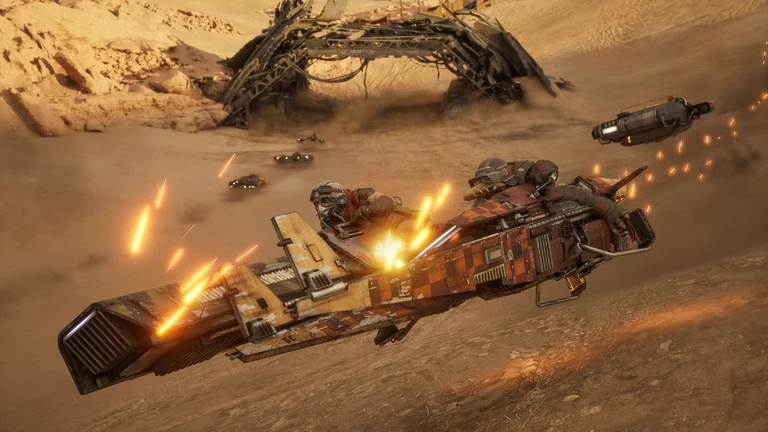
Set one objective before starting
Our suggested first objective is to finish a familiar segment with fewer uncontrolled corrections. That is a practice goal, not a mission requirement or an achievement. Read the tutorial prompts and the bindings on your installed build before changing controls.
Use an available low-pressure activity to establish a baseline. Record the vehicle, Racer Style, track or event, input device and build number. A lap on a different track with a different vehicle is useful experience, but it is a poor comparison when you are trying to isolate a setting.
- Make the HUD and text comfortable to read, then verify steering and camera bindings.
- Drive one attempt with smooth corrections. Notice where you brake, turn too late or collide.
- Choose a single troublesome corner or hazard as your next practice target.
- Repeat with one deliberate change. Keep the other choices as similar as the mode allows.
Separate speed, line choice and traffic
A faster attempt can still be less useful if you cannot explain the difference. Start with the route you can follow reliably. Add a speed-related action after you recognize the approach to the next corner, and compare its effect on your exit position rather than only the headline time.
When another racer forces a correction, distinguish the collision from your response to it. In your notes, “traffic pushed me outward; I over-corrected inward” gives you two events to examine. “Bad handling” does not. Repeating a route without traffic may reveal whether the original problem came from the vehicle, a control setting or the encounter.
The developer’s launch interview describes failure as part of the replayable loop. It supports practicing another combination after a failed run; it does not promise that the same setup wins every event.
A short practice routine you can adapt
| Stage | Try | Record |
|---|---|---|
| Orientation | One slow, controlled attempt with the displayed controls. | The corner or action that caused the largest correction. |
| One change | Adjust one action or one setting. | What stayed the same and what changed. |
| Confirmation | Repeat when the event permits a comparable attempt. | Whether the benefit appeared again. |
| Next session | Stop with one question rather than five new settings. | The next specific experiment. |
If the game’s available events change the route or conditions, write that difference down. A comparison with different conditions is still a useful note, but it cannot isolate a vehicle or settings effect. Take a break when mistakes become rushed; extra attempts are not automatically better practice.
Keep the lesson, not only the result
Your next-session note
Write one observation, one change and the result you want to compare. The fields stay in this open tab only; download a text copy before leaving. Nothing here reads your game save.
Enable JavaScript to download; you can also copy your notes manually.
For example, a hypothetical note could read: “I repeatedly touch the outer barrier at the same corner. Next attempt, I will begin steering earlier without changing the vehicle. I will compare clean exits, not my fastest lap.” This is an invented practice example, not a recorded lap from our playtest.
When control becomes consistent, use the vehicle comparison sheet. If a similar input produces visibly uneven motion, work through the PC checks before blaming a particular vehicle.
Sources: review and scope
Sources checked 10 October 2026. Independent, AI-assisted writing checked against the specific references below. Game facts are limited to the cited official material. Practice routines and comparison worksheets are our editorial suggestions; no independent playtest, benchmark or complete unlock route is claimed.
- Official game site: availability, platforms and game overview
- Publisher: 6 October release announcement and editions
- Xbox Wire, 6 October 2026: developer explanation of runs and vehicle choices
Send a correction with the page, source and relevant version or travel date.